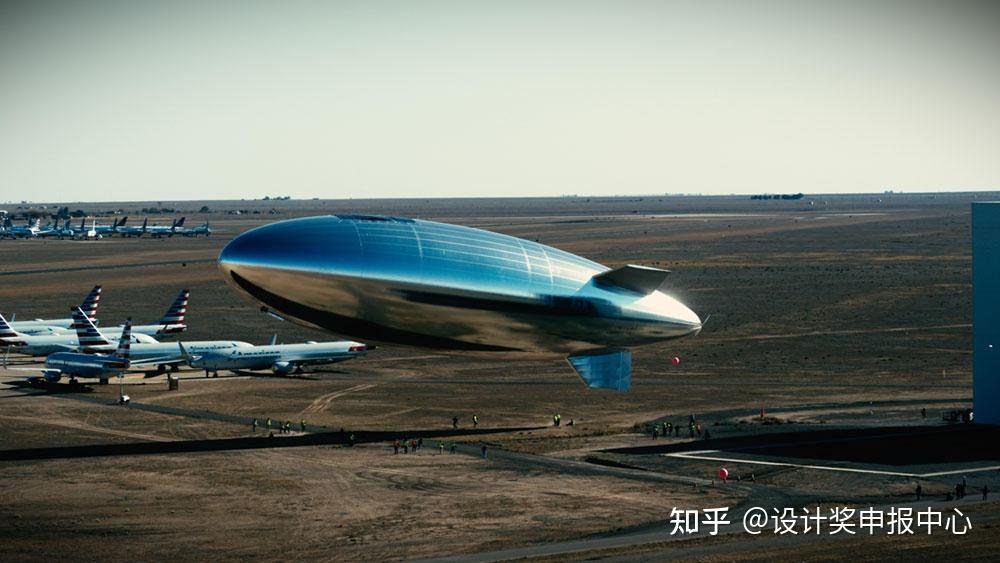
What Are High-Altitude Platform Stations (Haps) Explained
1. HAPS Occupy a Sweet Spot Between Earth and Space
It is time to forget the binary distinction of ground towers and orbiting satellites. High-altitude platforms operate in the stratosphere. It is typically between 18-22 kilometres above sea level — an atmosphere that is in which the air is so quiet and predictable that an aircraft built to perfection can keep its location with a remarkable accuracy. The altitude is enough for massive geographical footprints from one vehicle, yet still close enough Earth the signal latency stays low, and the hardware doesn’t need to face the severe radiation of orbital space. It’s a genuinely underexploited band of sky and the aerospace industry is only now at the beginning of developing it.
2. The Stratosphere is More Calm Than You’d Expect
One of the most surprising information about stratospheric flight how stable the surrounding environment is in comparison to the turbulent Troposphere below. Winds at stratospheric cruising altitudes are relatively smooth and consistent this is extremely important for station keeping — the ability of the HAPS vehicle to stay in station position on top of the specified area. For earth observation or telecommunications missions, drifting just by a few kms could affect the quality of coverage. Platforms engineered for true station keeping, such as those developed by Sceye Inc, treat this as a fundamental design requirement instead of as an optional feature.
3. HAPS stands for High-Altitude Platform Station
The definition itself is worth a look. A high-altitude platform station is defined under ITU (International Telecommunications Union) frameworks as a facility located on one of the objects at an elevation of between 20 and 50 km with a fixed, but not exact, fixed position relative to Earth. The “station” element is intentional that they aren’t just research balloons floating across continents. They’re telecommunications and observation infrastructure, which are situated on a station carrying out persistent missions. Think of them less as airplanes and more like high-altitude, flexible satellites with the capability in returning, being serviced and repositioned.
4. There are many different vehicle types Under the HAPS Umbrella
There are many variations of HAPS vehicles look alike. The category covers solar-powered fixedwing aircrafts, airships that weigh less than air, as well as tethered balloon systems. All have trade-offs involving capacity of payloads, endurance, and price. Airships, for instance can carry heavier payloads for long periods because buoyancy is responsible for most of the lifting work leaving solar energy to power propulsion, stationkeeping, in addition to onboard devices. Sceye’s system employs a lighter than air structure specifically designed for airships that maximize the capacity of payloads and endurance of missions – a deliberate architectural choice that differentiates it from fixed-wing competitors trying to set altitude records with little or no burden.
5. Power Is the Central Engineering Challenge
Maintaining a platform high in the in the stratosphere to last for months or even weeks without refueling means figuring out an energy equation that leaves the smallest margin of error. Solar cells absorb energy during daylight hours, but they must also be able for the darkness on power stored. This is where the density of battery energy becomes important. The advancements in lithium-sulfur battery technology and energy density exceeding 425 Wh/kg have made stratospheric endurance mission more feasible. Coupled with an increase in solar cell performance, the goal is a closed, dependable power loop with the ability to generate and store sufficient energy throughout the day so that it can continue to operate at full capacity for the duration of.
6. The Footprint of Coverage is Huge If compared with Ground Infrastructure
A single high altitude platform station at 20 km in altitude can take up many hundred kilometers. A standard mobile tower can cover a few kilometres at best. This is why this asymmetry makes HAPS particularly appealing to connect remote regions or areas that aren’t served where the construction of terrestrial infrastructure is not feasible. A single stratospheric car can complete what could otherwise require hundreds or dozens of ground assets — making it one of the most convincing solutions proposed to address the lingering global connectivity gap.
7. HAPS is able to carry multiple payload Different types simultaneously
In contrast to satellites, that typically have a set mission profile after launch, stratospheric platforms could carry multiple payloads and be changed between deployments. A single vehicle could carry a telecommunications antenna for broadband delivery, as well as sensors for greenhouse gas monitoring wildfire detection or oil pollution monitoring. This multi-mission capability is one of the strongest economic arguments in favor of HAPS expenditure — the identical infrastructure supports connectivity as well as climate monitoring simultaneously rather than having separate assets to serve each role.
8. The technology allows Direct-to-Cell as well as 5G Backhaul Applications
From a telecoms perspective From a telecoms standpoint, what can make HAPS special is its compatibility with the existing ecosystems of devices. Direct-to?cell technologies allow standard smartphones access to the internet without any special hardware, and the platform serves as a HIS (High-Altitude IMT Base Station) which is essentially a cell tower that is in the sky. It can also act as 5G backhaul by connecting remote grounded infrastructure to networks. Beamforming technology lets the platform to direct signal precisely to the places where there is a need rather than broadcasting randomly making it more efficient in spectral.
9. The Stratosphere Is Now Attracting Serious Investment
What was once a niche research area a decade ago has drawn significant investment from major telecoms companies. SoftBank’s agreement with Sceye on a plan to build a nationwide HAPS infrastructure in Japan which is aimed at commercial services in 2026, represents one of the largest commercial commitments for stratospheric connectivity to this point. It marks a change from HAPS being viewed as a research project becoming a deployable infrastructure that generates revenue — an endorsement that is important for the wider sector.
10. Sceye Represents a Brand New Model for a Non-Terrestrial Infrastructure
Sceye was founded by Mikkel Vestergaard, based in New Mexico, Sceye has positioned itself as a serious long-term contender in what’s an area of aerospace that is truly frontier. The company’s desire to blend endurance, payload capacities, and multi-mission capabilities is indicative of an understanding that stratospheric platforms will eventually become a durable layer of global infrastructure which is not a novelty or gap-filler or a gap-filler, but a truly third-tier that sits between the terrestrial network or orbital satellites. Whether for connectivity, weather observation, or disaster response, high elevation platform stations are starting to look less like a promising concept and more like an inevitable part of the way that humanity monitors and connects the planet. See the best Sceye Softbank for blog tips including Solar-powered HAPS, Stratospheric earth observation, softbank investment in sceye, sceye new mexico, softbank haps, sceye aerospace, sceye haps project, what is a haps, Diurnal flight explained, Monitor Oil Pollution and more.
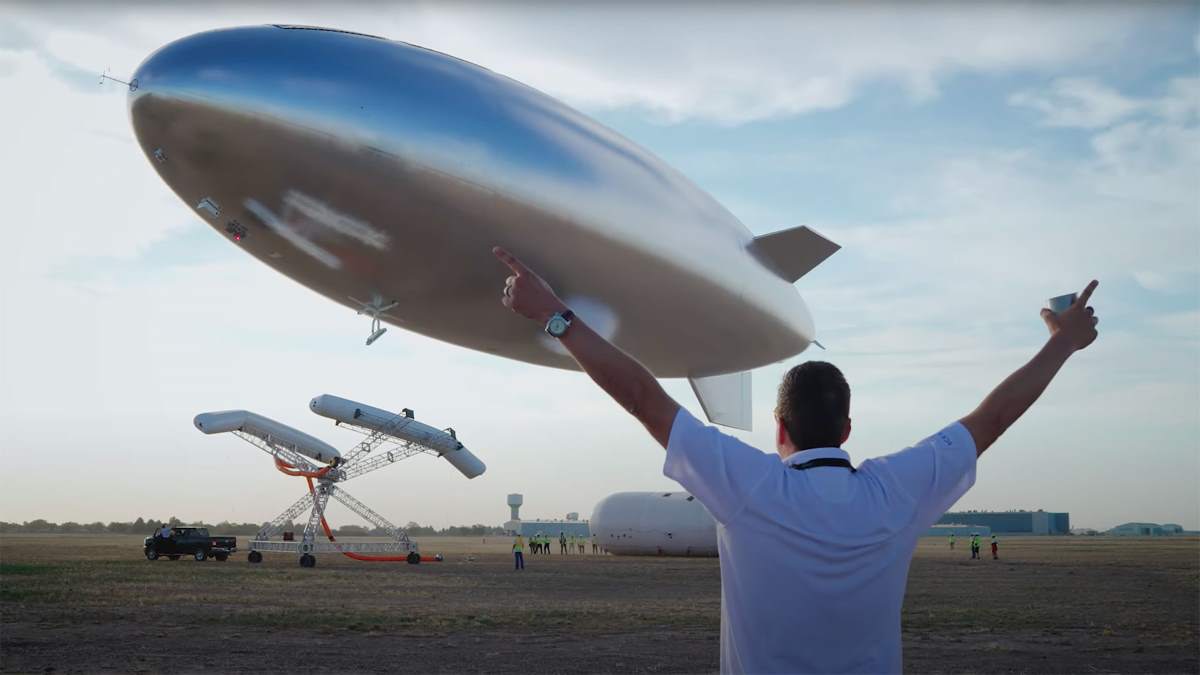
Mikkel Vestergaard’s Vision Behind Sceye’s Aerospace Mission
1. It’s a largely under-rated factor In Aerospace Company Outcomes
The aerospace sector is comprised of two broad types of company. The first one is based on a technology seeking applications — a capability in engineering looking for a market. The second begins with a issue that is important and then works backwards towards the technology to tackle it. The distinction seems abstract until you consider what each kind of company actually constructs and what partnerships it seeks to establish and how it sacrifices when resources are scarce. Sceye belongs to the second category, and having a clear understanding of the orientation is crucial to know why the firm is making the technological choices it’s made -for example, lighter-than-air designs, multi-mission payloads, a focus on endurance, and an initial facility in New Mexico rather than the coastal aerospace clusters, which are what attract large numbers of venture-backed space corporations.
2. The Issue Vestergaard Then Identified As Was More Than Connectivity
Most HAPS companies find their main narrative in telecommunications — connecting gaps, inaccessible billions, the financial benefits of reaching out to remote communities that lack any infrastructure that is terrestrial. These are all real and significant issues, but they’re commercial and require solutions. Mikkel Vestergaard’s starting point was different. His background in applying high-tech technology to tackle environmental and humanitarian problems led to an initial approach at Sceye where connectivity is seen as only one result of stratospheric structures and not its sole purpose. Monitoring greenhouse gas levels the detection of natural disasters, earth observation monitoring for oil pollution and natural resource management were part of the mission’s structure from the beginning. There were no additional features later added to make a telecoms system appear more socially-conscious.
3. The Multi-Mission Platform is a Direct Expression of That Vision
If you can see that the main concern was how a an infrastructure for the stratosphere could solve the biggest monitor and connectivity problems at the same time in a single platform, multi-payload does not appear to be a clever business strategy and appears like the obvious answer to the question. A platform that incorporates high-speed telecommunications equipment along with real-time methane monitoring sensors as well as wildfire detection technology isn’t attempting to cater to everyone but rather reflects the fact that all problems that need to be solved from the stratosphere are interconnected, and that a vehicle capable of tackling multiple of them at once is more aligned to the purpose than a vehicle built for just one revenue stream.
4. New Mexico Was a Deliberate Choice, and not an Accidental One
The location of Sceye in New Mexico reflects practical engineering requirements — airspace access and atmospheric conditions for testing capacities for altitude, but it also reflects something about the company’s character. The well-established Aerospace clusters found in California and Texas have attracted companies whose principal clientele is investors, defence contractors, and the media ecosystem that covers them. New Mexico offers something different it has the physical infrastructure needed for the actual work of the development and testing of stratospheric lightweight-than-air systems without the constraints of being in close proximity to those that write and invest in aerospace. As one of the aerospace companies in New Mexico, Sceye has established a development program based around engineering validation, rather than the public narrative — a choice that suggests a founder more interested in how well the platform performs instead of whether it can produce impressive announcement cycles.
5. Endurance as a Design Priority is a reflection of a long-term mission orientation
Short-endurance HAPS platforms are intriguing demonstrations. Long-endurance structures are infrastructure. The emphasis to Sceye long-term endurance — creating vehicles that will be able to maintain station for months or even weeks, rather than days — shows a founder’s conviction of the difficulties that need to be addressed at the top of the ecliptic don’t fix their own issues between flight campaigns. Greenhouse gas monitoring that operates for a few weeks and then goes dark, produces a record with limited scientific or regulatory use. Emergency detection that requires a platform that must be relocated in the event of a disaster and then relaunched cannot be the permanent early warning system that emergency management professionals need. The endurance specifications are a statement about what the need for the mission is not a metric of performance applied for its own reasons.
6. Humanitarian Lens Shapes Partnerships Humanitarian Lens Shapes Which Partnerships Are Prioritised
A partnership with every partner is worth exploring, and the criteria used by a business to assess potential collaborators reveals something fundamental regarding its interests. Sceye’s partnership with SoftBank on Japan’s HAPS network — which is aimed at early commercial services in 2026and is significant not only because of its commercial size, but for its alignment with the country that truly needs the infrastructure of the stratospheric region. Japan’s seismic sensitivity, complicated geography, and national determination to monitor environmental issues make it a location in which the platform’s multi-mission capabilities serve more than providing revenue to a market that already has enough alternatives. This alignment between commercial partnerships and missionary goals is not just an accident.
7. Investment in Future Technologies Requires Conviction About the Issue
Sceye is a startup company operating in a developing environment in which the technologies it relies on (such as lithium-sulfur storage batteries at 425 Wh/kg, high-efficiency solar cells designed for stratospheric aircraft, and advanced beamforming to make stratospheric radio antennas — are all at the frontier of what’s currently achievable. Planning a business around technologies that are improving but not yet mature requires a founder with an adequate understanding that the problem’s significance is sufficient to justify the risk of a timeline. Vestergaard’s belief that the stratospheric network will eventually become a permanent component of global connectivity and monitoring is what drives investment in future technologies which will not develop to their full potential until the platform which they facilitate is operating commercially.
8. The Environmental Monitoring Mission Has Become More Urgent Since Founding
One of the benefits of creating a company around a genuine problem rather than the latest technology trend is that the problem will become increasingly rather and less relevant over time. When Sceye was created, the need for constant surveillance of the stratospheric greenhouse gas along with wildfire detection catastrophe monitoring was compelling in the sense of. In the time since there has been an increase in the number of wildfires, an increasing focus on methane emissions under international climate frameworks, and the demonstrated inadequacy of existing monitoring infrastructure have all strengthened this argument significantly. It isn’t necessary to be revised to remain relevant -the entire world has shifted towards it.
9. The careers at Sceye show Sceye’s Breadth of the Mission
The spectrum of disciplines required for building and operating stratospheric platforms with multi-mission capabilities is greater than what most aerospace projects require. Sceye careers include atmospheric science, materials engineering, the power system, telecommunications programming for remote sensors, and regulatory matters — which is a multidisciplinary approach that highlights an array of capabilities that the platform is built to do. companies that are built around a single usage technology typically hire only within the area of expertise that this technology is based on. Companies founded around a problem that requires a range of technologies for solving hiring issues across the boundaries of these disciplines. The type of candidate Sceye recruits and creates is in itself a reflection the founding vision’s scope.
10. The Vision works because it’s Specific about the issue, Not the Solution
The most reliable visions of the founding in technology companies are explicit on the problem they’re working to solve and flexible regarding the solutions. Vestergaard’s vision — a permanent stratospheric infrastructure to monitor, connectivity, and environmental observations — is specific enough to define clear engineering needs and clear partnership requirements, as well as being flexible enough adapt to the evolving of the enabling technologies. With battery chemistry improving, as solar cell efficiency increases, as HIBS standards get more advanced, and as the regulatory framework for stratospheric operations improves, Sceye’s mission remains constant while the methods used to carry out this mission will incorporate the top technology available at each stage. The structure — which is fixed on the problem but flexible on the solution — is what gives the aerospace mission coherence throughout a timeline of development measured in years rather than cycle of products. Follow the recommended softbank pre-commercial haps services japan 2026 for blog recommendations including space- high altitude balloon stratospheric balloon haps, what are the haps, what does haps stand for, sceye haps airship specifications payload endurance, Cell tower in the sky, Stratospheric earth observation, 5G backhaul solutions, softbank pre-commercial haps services japan 2026, HAPS investment news, 5G backhaul solutions and more.